How Youth Jiu Jitsu Sparks Healthy Habits for Southampton Families
A few hours on the mat each week can reshape how your child eats, sleeps, focuses, and handles stress.
Southampton families want more than a busy calendar. You want routines that actually improve your child’s day to day life: steadier moods, better sleep, more confidence in social situations, and the kind of physical activity that builds a strong body without constantly flirting with injury. That is exactly why Youth jiu jitsu has become such a reliable “anchor habit” for kids.
In our youth program, we see something simple happen again and again. When kids commit to training, healthy habits start stacking: hydration improves because class is physical, screens shrink because practice has a time and place, and emotional regulation grows because every round demands patience and control. Youth jiu jitsu is not just an activity, it is a structure that supports your whole week.
Just as important, research mirrors what we watch on the mat: parents report major gains in self confidence, reduced anxiety, stronger commitment, and an increased sense of belonging. Youth jiu jitsu also tends to build self control and pro social behavior while decreasing aggression, especially when kids train consistently, even just one to three times per week.
Why Youth Jiu Jitsu Works So Well for Southampton Kids
Southampton is a place where families care deeply about wellness, education, and keeping kids engaged in meaningful routines. It is also a place where schedules can swing hard, especially with seasonal changes, long summer stretches, and the constant pull of devices. Youth jiu jitsu works here because it is predictable, measurable, and personal.
Unlike activities where a child can drift through practice and hide in the group, jiu jitsu requires active problem solving. Your child has to think, move, breathe, and adapt in real time. Over weeks and months, those skills stop being “just for class” and start showing up at home and school.
A healthy habit loop, built into every class
We structure youth classes so your child repeats the same kind of loop that builds lasting habits:
• Show up on time and prepared, which reinforces responsibility
• Warm up with purpose, which teaches the body to transition from busy to focused
• Learn a technique, which rewards patience and listening
• Drill with a partner, which builds cooperation and empathy
• Spar in a controlled way, which develops emotional control under pressure
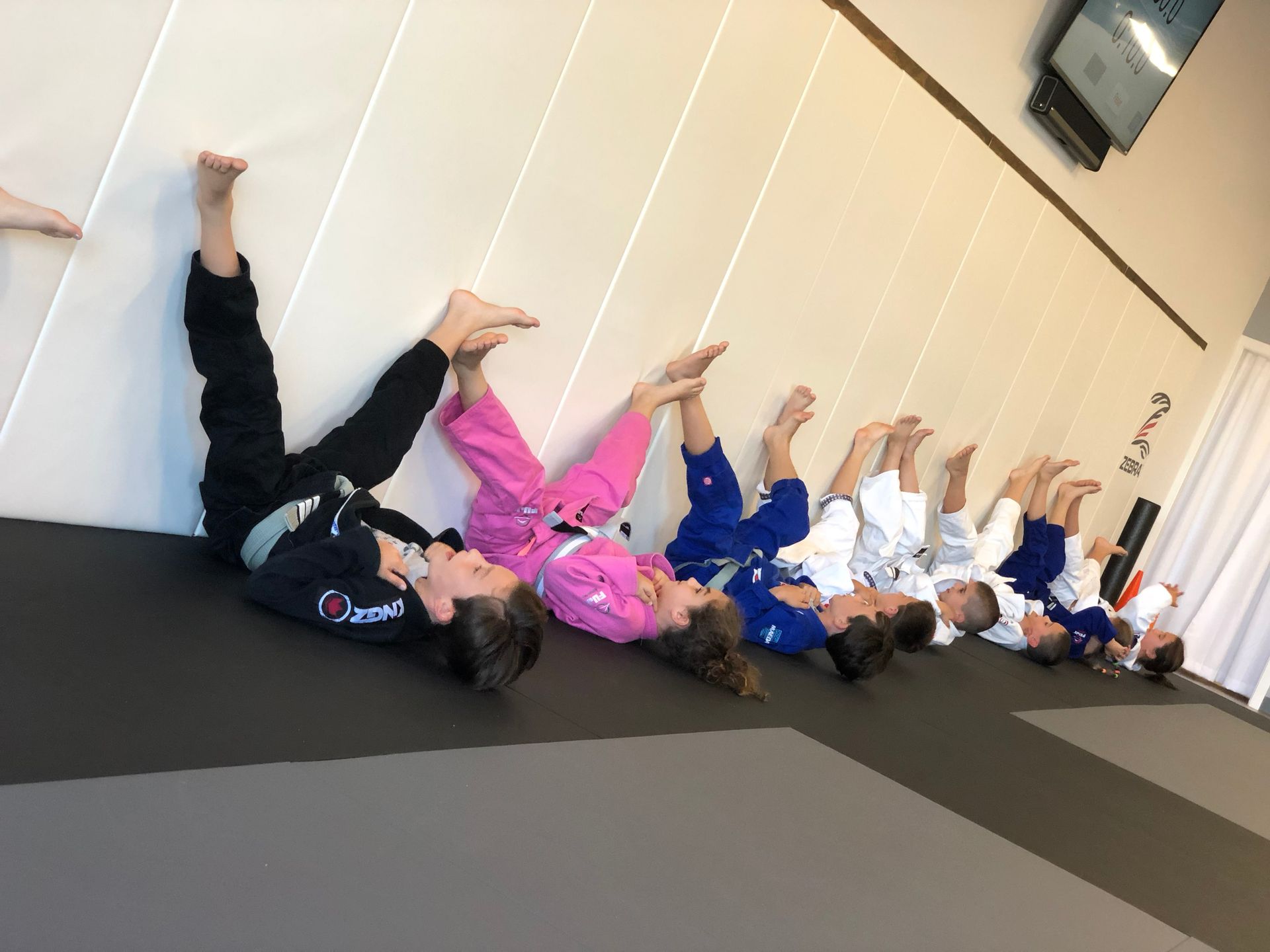
• Cool down and reset, which supports recovery and better sleep later
That rhythm might look small, but practiced week after week, it becomes a blueprint for how to handle challenge.
Physical Benefits: Fitness Without the Wear and Tear
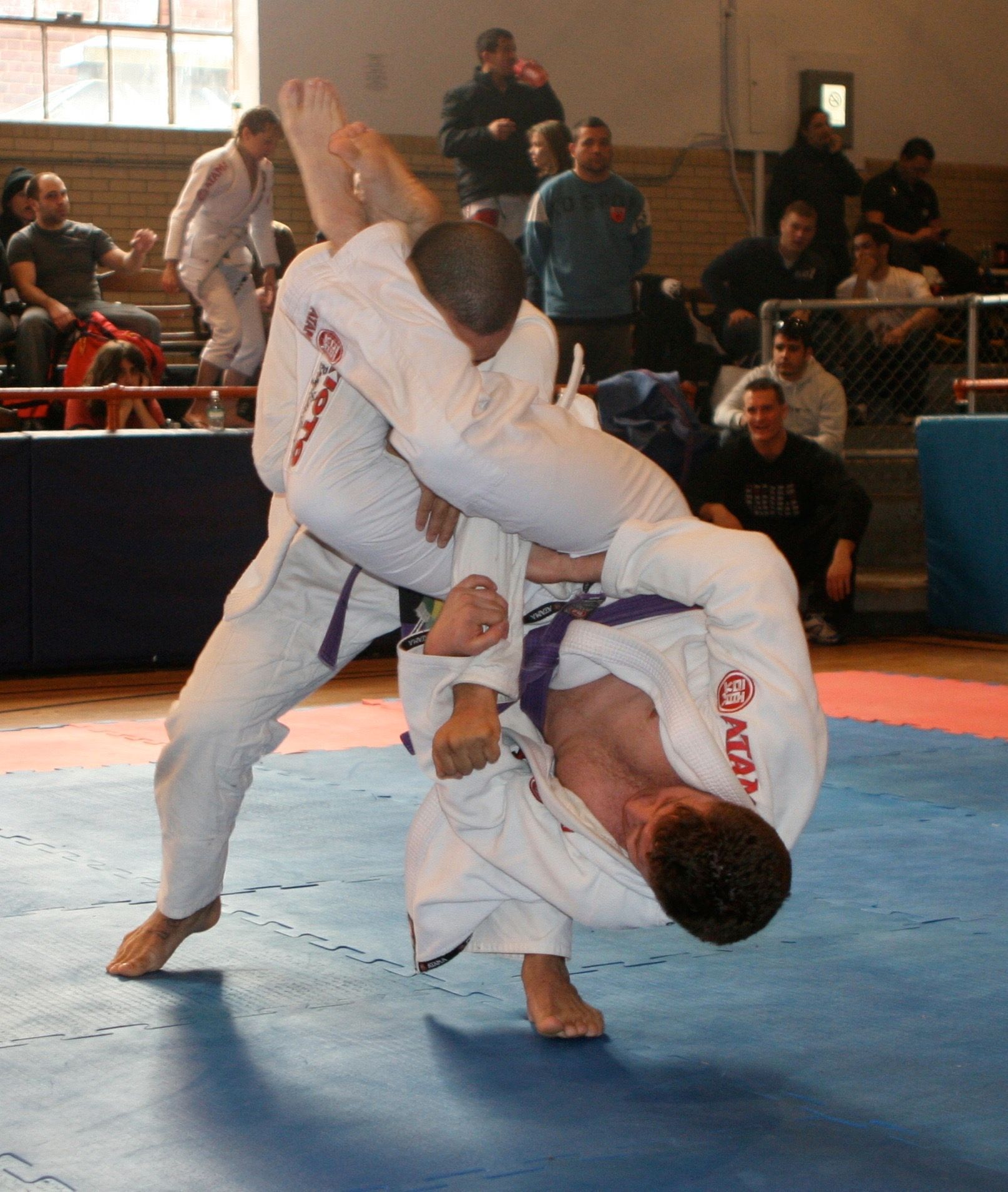
Parents often ask whether Youth jiu jitsu is “hard on the body.” Our honest answer: it is challenging, but it is also one of the more joint friendly, head safe paths in contact athletics when it is coached correctly and practiced with control. Because most work happens on the ground, the risk profile looks different than high impact field sports where collisions and headers can be part of a normal season.
What your child develops physically
Youth jiu jitsu builds athleticism that carries into everything else your child does:
• Core strength and posture, from learning to frame, bridge, and control positions
• Coordination and balance, from constant transitions between base and movement
• Grip strength and body awareness, from controlled holds and escapes
• Cardiovascular fitness, because even short rounds elevate heart rate fast
• Reaction time, as kids learn to recognize patterns and respond calmly
A lot of parents notice changes outside the gym first: sitting straighter at homework, moving more confidently on the playground, and looking less “tired but wired” at bedtime.
Mental Benefits: Calm Under Pressure Is a Trainable Skill
The most underrated piece of Youth jiu jitsu is how it trains the nervous system. Kids learn that discomfort is not an emergency. Getting stuck in a position becomes a puzzle, not a panic. Over time, this shows up as fewer emotional spikes when something goes wrong, and more willingness to try again.
Research backs this up in a way that is hard to ignore. Parents commonly report improvements in confidence, mood, and life skill transfer, along with reduced anxiety. Studies also link consistent jiu jitsu training with gains in self control and focus, with decreases in aggression compared to some forms of mixed martial arts that emphasize striking earlier.
Focus that transfers to school and home
In class, your child has to track details: where hands go, how hips move, what happens if a partner turns, and how to stay safe. That kind of attention is specific and repeatable. It is also similar to what kids need for reading comprehension, math steps, and following multi part instructions.
We also keep progress clear. Kids learn that improvement is not magic. It is repetitions, small corrections, and showing up when it would be easier to quit. That “I can work through this” mindset is one of the healthiest habits a young person can build.
Social Benefits: Confidence Without the “Team Pressure” Feeling
Southampton kids often juggle a lot: school expectations, social dynamics, and sometimes the quiet pressure to perform. Youth jiu jitsu gives kids a social environment that is cooperative, structured, and surprisingly supportive. Even though jiu jitsu looks like a combat sport, training partners help each other improve.
In our youth program, partnering teaches kids how to communicate, how to take turns leading and following, and how to show respect even when competition is involved. Parents often tell us the community piece is what makes their child want to come back, and that tracks with broader parent reported data showing a strong sense of belonging in youth BJJ environments.
Practical anti bullying confidence
We do not promise that training fixes every social issue, but we do see a clear pattern: when kids feel capable in their bodies, they carry themselves differently. Eye contact improves. Shoulders come back. Kids get less reactive because they trust their ability to stay calm. That is the kind of confidence that tends to reduce bullying targets in the first place.
What a Youth Jiu Jitsu Class Looks Like Here
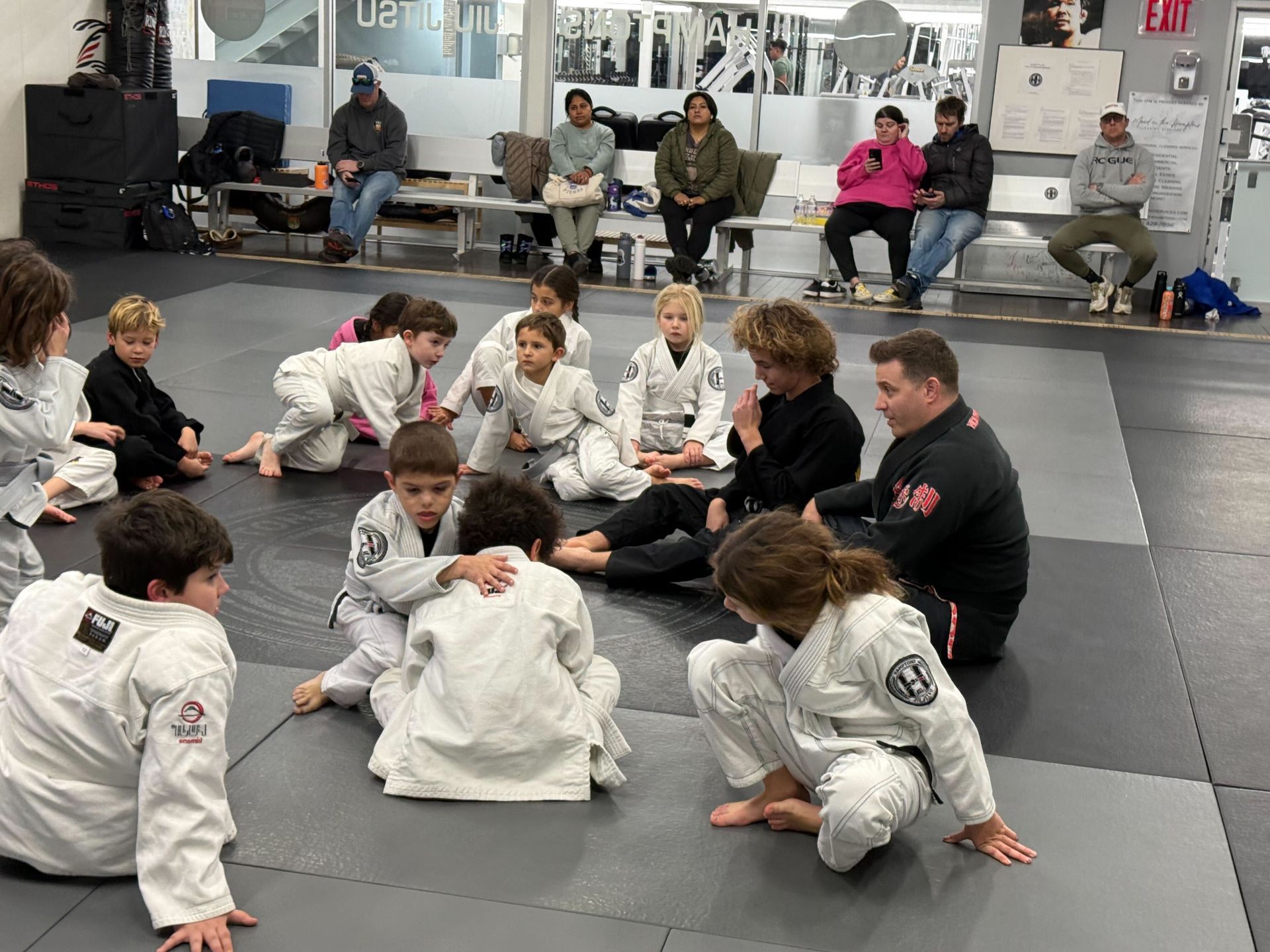
Parents deserve clarity, especially when you are choosing an after school commitment. Our classes follow a consistent structure so kids feel safe, know what to expect, and can measure progress.
The flow: structure with enough variety to stay fun
Most classes include:
• Movement based warm ups that build coordination and injury resistance
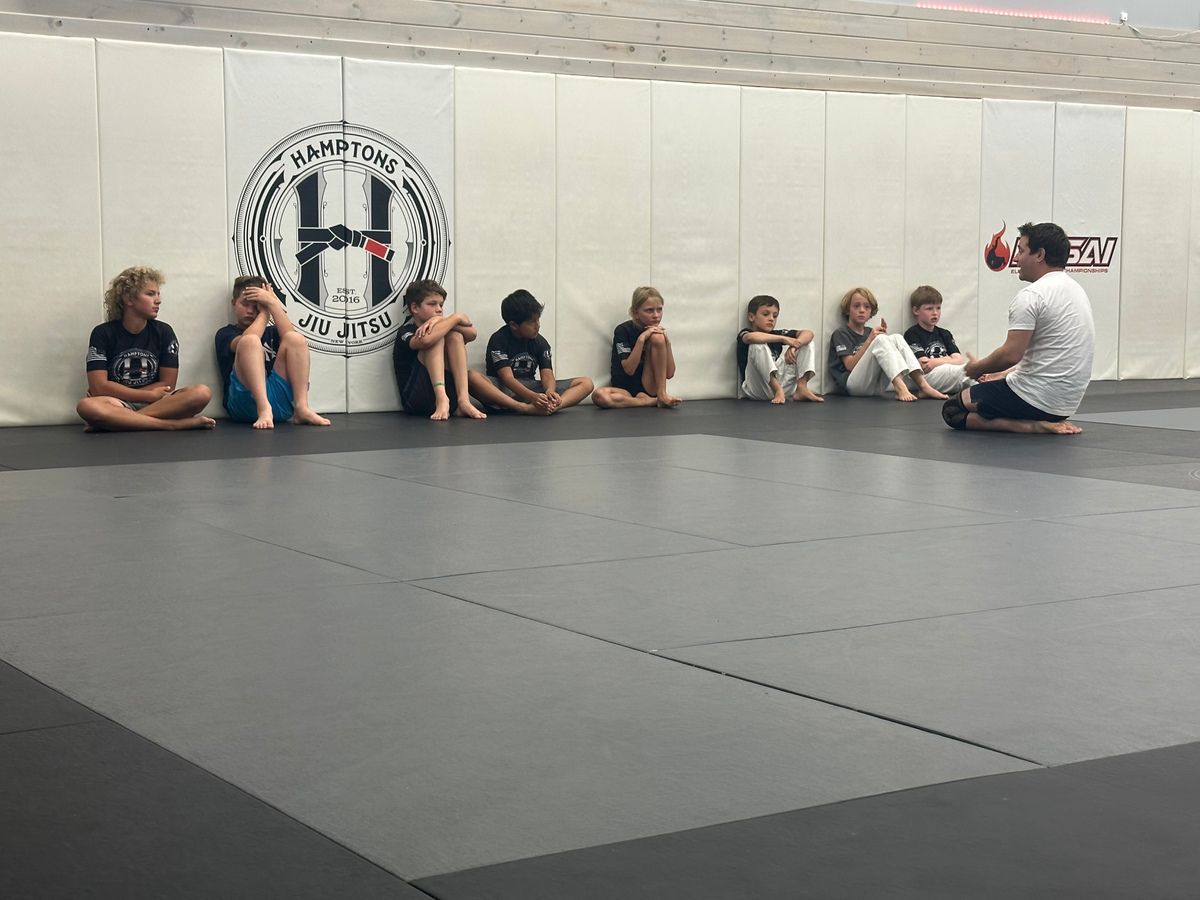
• Technique instruction taught in small, digestible pieces
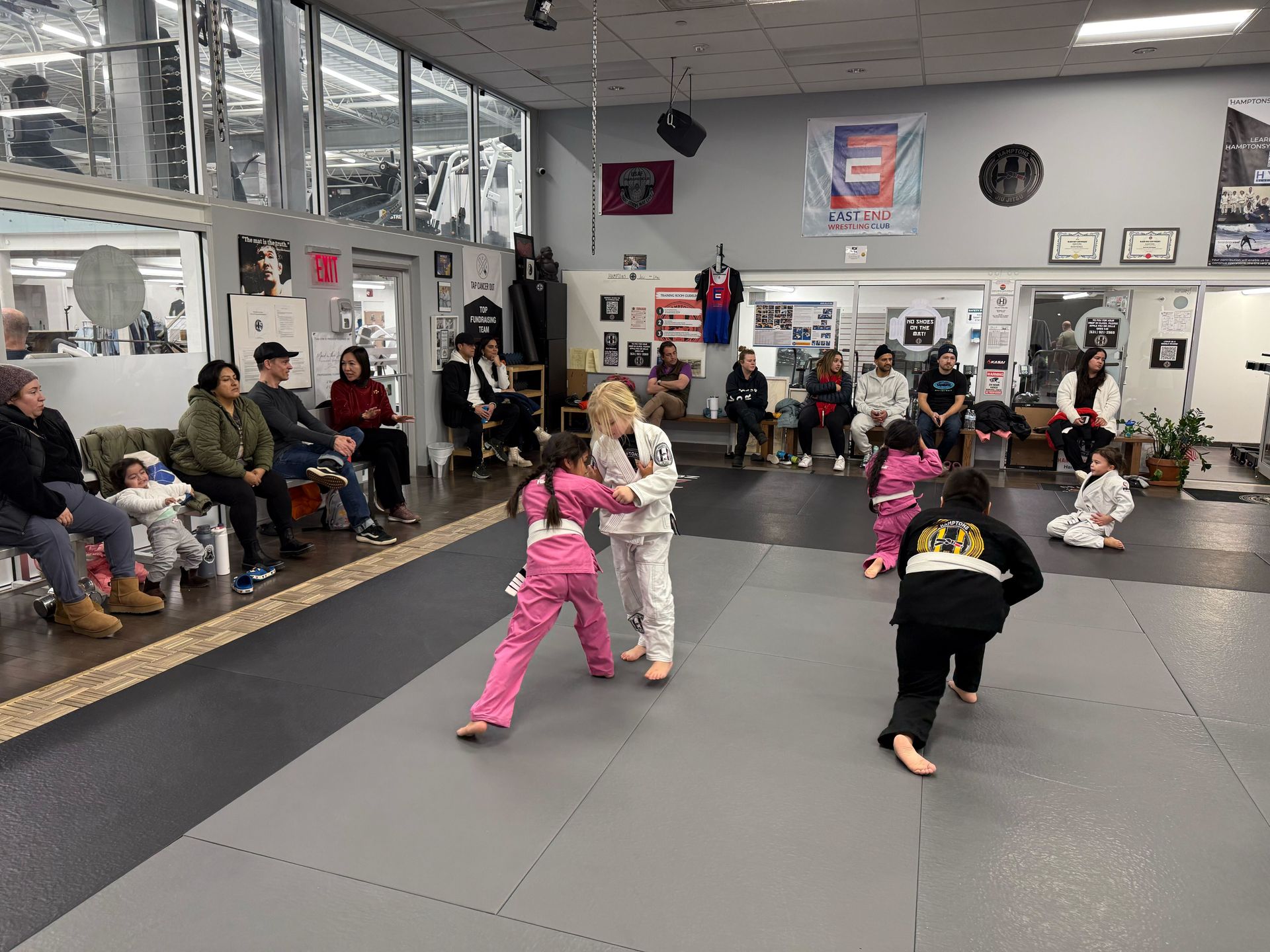
• Partner drilling with active coaching and safety reminders
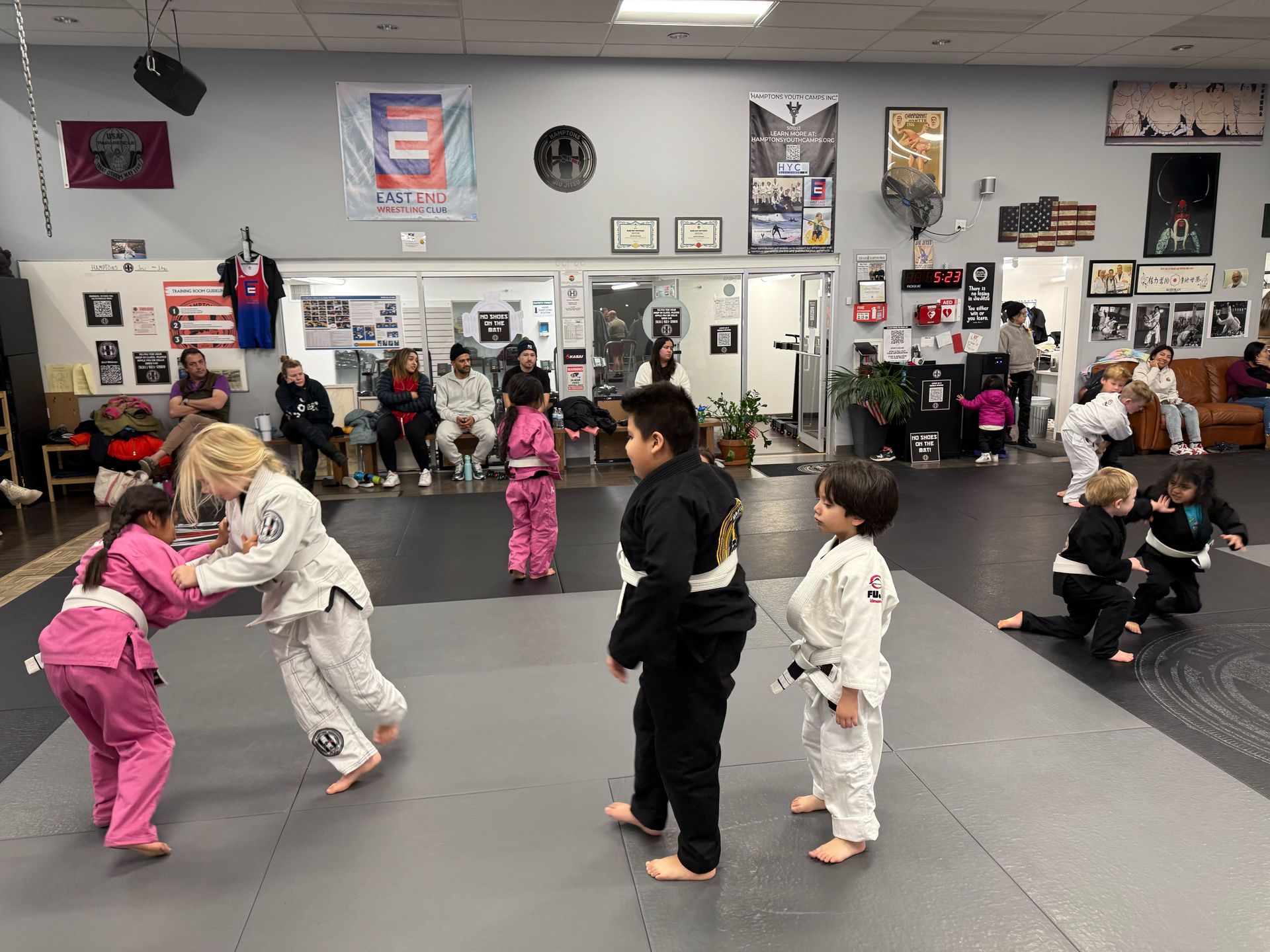
• Positional sparring that keeps kids focused on a specific goal
• Live rounds when appropriate for age and readiness, always supervised
• A brief wrap up so kids leave regulated, not amped up
Kids do not need to be “tough” to start. We coach toughness the right way: persistence, respect, and problem solving. The culture matters, and we protect it.
How Often Should Kids Train to Build Real Habits
More is not always better. For most families, consistency beats intensity. Research commonly points to one to three training sessions per week, around 45 minutes, as enough to create meaningful self control gains without burnout.
Here is a practical way to think about it in Southampton family life:
1. Start with two classes per week for the first month, so the routine feels real.
2. Hold that schedule for eight to twelve weeks, so your child experiences momentum.
3. Add a third day only if sleep, schoolwork, and mood are staying steady.
4. Keep at least one full rest day between harder weeks or busy school stretches.
5. Use summers and school breaks to maintain rhythm, not to “cram” progress.
That approach keeps Youth jiu jitsu sustainable, which is the whole point if you want healthy habits that last beyond a single season.
Safety and Readiness: What Parents Should Know
Safety is not an afterthought in jiu jitsu, it is part of the curriculum. We coach kids to protect training partners, to tap early, and to treat technique as skill development, not a fight. Because jiu jitsu is largely grappling based, it generally avoids the repeated head impacts associated with some high collision sports. That matters for parents who want an athletic outlet with a more controlled contact profile.
What age is best to start?
Many children are ready around ages four to six, but “ready” is less about a number and more about behaviors. If your child can handle a group setting, follow simple rules, and bounce back from small frustrations, Youth jiu jitsu can be a great fit. If attention is still developing, we work with that too, but we keep expectations age appropriate.
Youth Jiu Jitsu in Southampton NY: Turning Training Into Family Wellness
A youth program becomes even more powerful when the whole household supports it. The healthiest outcomes happen when training is treated like a family routine, not a chore.
Here are a few simple habits we encourage at home:
• Pack the bag the night before, so mornings and afternoons feel smoother
• Keep a water bottle in the car, because hydration affects mood and focus
• Plan a light snack after class, focusing on protein and fruit rather than sugary rewards
• Protect bedtime on training nights, since recovery is where growth happens
• Talk about effort, not winning, because persistence is the real skill
This is where Youth jiu jitsu shines. It naturally promotes the basics that parents already want: better sleep, better food choices, less screen drift, and a calmer, more confident kid.
Mixed Martial Arts in Southampton: Why Grappling Builds a Strong Foundation
Families sometimes explore mixed martial arts in Southampton because it feels modern and comprehensive. We agree with the goal: well rounded skills and real confidence. Our youth curriculum prioritizes grappling fundamentals first because it teaches control, patience, and safety in a direct way. Kids learn how to manage space, how to stay calm in close contact, and how to solve problems with technique instead of force.
As kids mature, that foundation supports any direction your family prefers, whether your child stays focused on sport grappling, trains for personal development, or simply uses the skills to feel more secure and disciplined.
Take the Next Step
If you want a program that supports your child’s physical health, emotional regulation, and social confidence, Youth jiu jitsu is one of the most reliable paths we have seen. The best part is that it does not require perfection, just consistency and a supportive place to train.
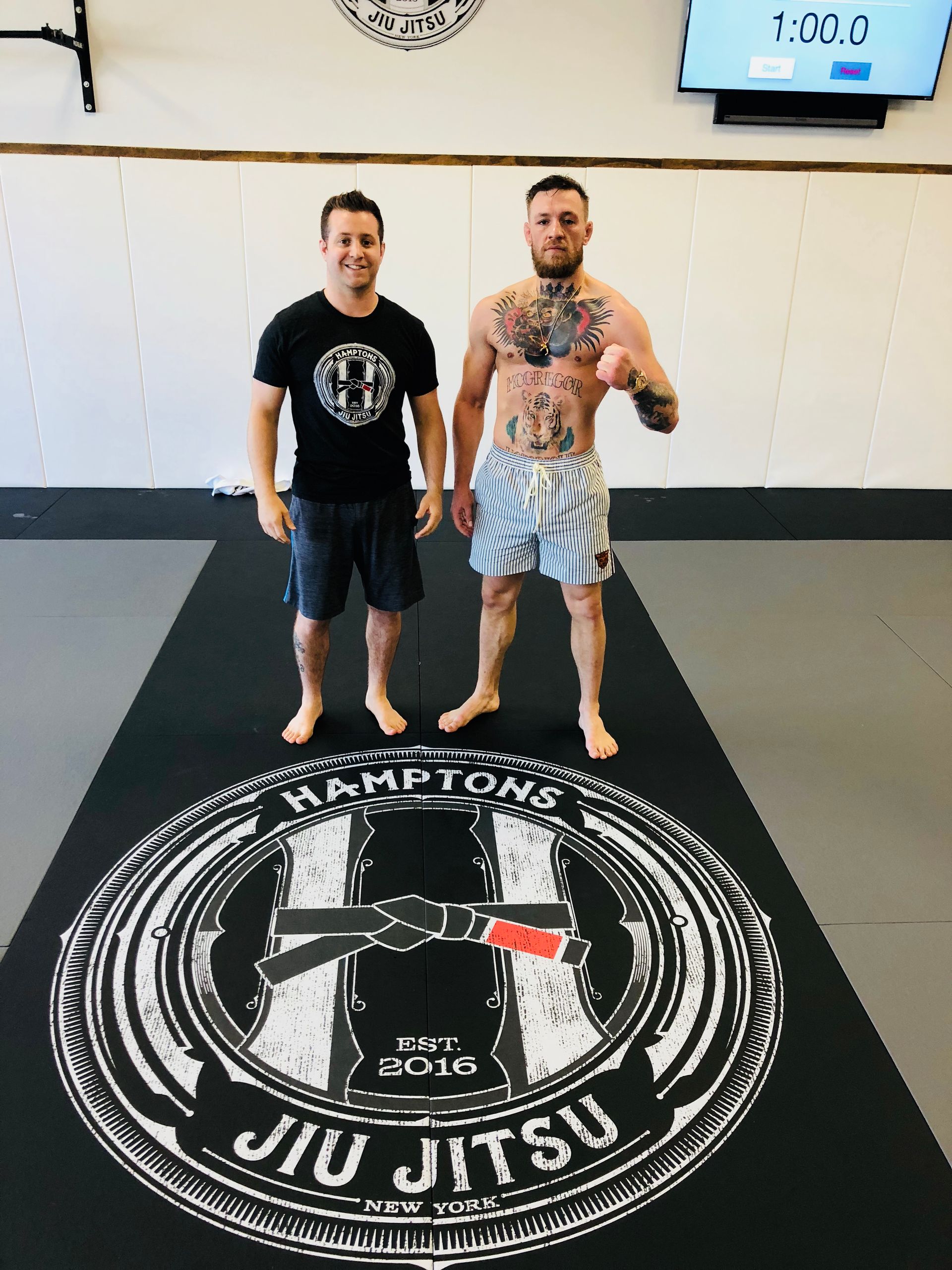
At Hamptons Jiu-Jitsu, we build youth classes around safety, structure, and steady progress so Southampton families can turn training into a routine that genuinely improves life off the mat, too.
Continue your martial arts journey beyond this article by joining a class at Hamptons Jiu-Jitsu.
ACCESS OUR SCHEDULE
& EXCLUSIVE WEB SPECIAL
Secure your spot and get started today with our EXCLUSIVE offer!