How Youth Jiu Jitsu Builds Discipline and Focus in Young Athletes
A good youth program does more than teach moves, it trains attention, patience, and follow through.
When parents ask us what changes first with youth jiu jitsu, our answer is usually discipline. Not the stiff, forced kind, but the everyday ability to listen, try, reset, and keep going. In Southampton, NY, young athletes juggle school, activities, screens, and social pressure, so the skill of focusing on one task at a time is a real advantage.
Youth jiu jitsu works because it is structured and measurable. Kids learn how to line up, how to partner safely, how to practice the same movement until it feels natural, and how to stay calm when something is difficult. Over time, that routine becomes a habit that shows up in sports, in class, and at home.
Research and parent reporting back this up. In large parent surveys, 78.6% reported improved concentration, 96.4% reported better life skill transference like discipline, and 92.8% reported improved mental flexibility from Brazilian Jiu-Jitsu training. Parents also commonly report big confidence gains, with 96.4% noting improved self confidence, plus reduced anxiety and better emotional control in stressful situations.
Why youth jiu jitsu is uniquely effective for discipline and focus
Discipline is not a lecture. It is a pattern. In our youth jiu jitsu classes, your child repeats patterns that reward self control and attention: listen, watch, try, adjust, and try again. This matters because kids learn best through experience, not reminders.
Focus develops in small moments. A child needs to keep their eyes on an instructor during a demonstration, remember a two step detail, and then apply it with a partner who is moving. That is practical concentration. Over time, we see kids go from scattered effort to purposeful effort, because the class environment makes focus the easiest way to succeed.
Another important piece is that jiu jitsu is problem solving under pressure. Even in beginner friendly training, students experience the feeling of being stuck and needing to stay calm long enough to find a solution. That is the same mental muscle your child uses on a hard homework assignment, a tough shift in a game, or a stressful test.
Structure creates habits that carry into school and sports
A well run youth program is predictable in the best way. Kids know what is expected, what the warm up looks like, how to treat partners, and what happens when the coach calls time. That predictability gives kids a safe container to practice self regulation.
In practical terms, your child learns to:
- Wait for instructions without interrupting
- Follow a sequence of steps in order, even when excited
- Stay in the room mentally, not just physically
- Take feedback without taking it personally
- Finish what we start, even when it gets challenging
That last point is the heart of discipline. The mat is a place where follow through becomes normal.
How training builds focus in young athletes, step by step
Focus is a skill we can train, and we train it on purpose. A youth jiu jitsu class is built around short cycles of instruction, practice, and correction so kids can stay engaged while still going deep on details.
Here is the general progression we use to build focus over time:
1. Attention first: Students practice looking, listening, and mirroring simple movements with good posture and body control.
2. Controlled repetition: We drill the same technique with small changes, so kids learn to hold details in their mind.
3. Partner awareness: Students learn distance, timing, and safety cues, which requires being present with another person.
4. Decision making: Light positional games teach kids to choose a response instead of freezing.
5. Calm under pressure: Age appropriate sparring teaches composure, breathing, and persistence when a plan fails.
This is one reason youth jiu jitsu is such a strong complement to other sports. Focus in training is not passive, it is active, physical, and immediate.
Drilling and feedback teach patience, not perfectionism
Kids do not need to be perfect to improve. In fact, jiu jitsu works best when students get comfortable making mistakes and adjusting quickly. That is mental flexibility, and parent surveys report 92.8% improvement in that area.
We keep corrections simple and specific. Instead of vague feedback, we cue one or two details that matter most. Your child learns to accept that feedback, try again, and notice the difference. That loop builds patience and confidence at the same time.
Discipline through goals: belts, milestones, and measurable progress
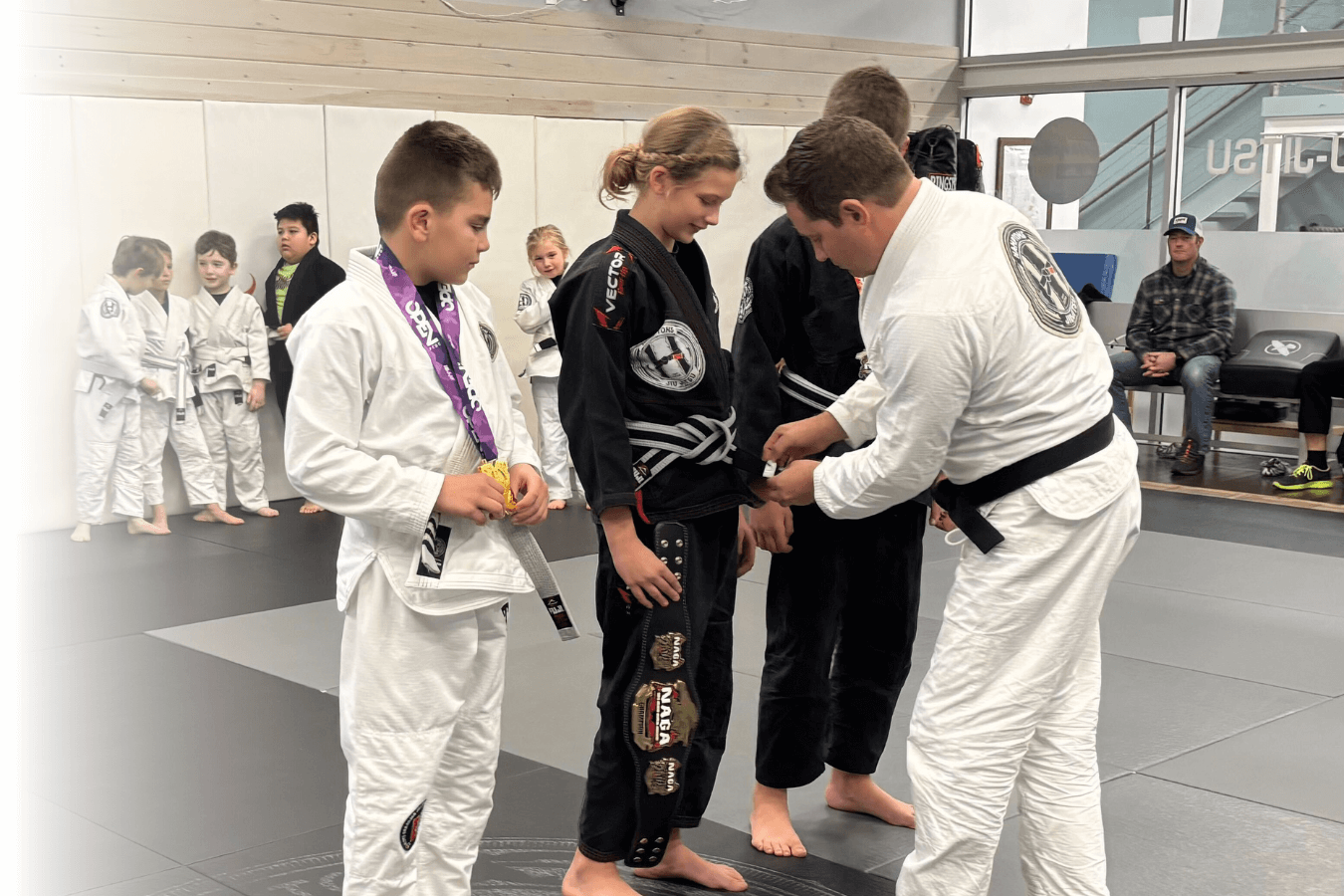
Young athletes thrive when progress is clear. Youth jiu jitsu is built around milestones that encourage consistent effort: learning a fundamental movement, earning a stripe, improving a position, or demonstrating respectful training habits.
Belts are not just about technique. In a strong youth program, belt progress reflects:
- Attendance and consistency
- Coachability and listening skills
- Partner safety and self control
- Effort during drills
- The ability to stay composed in sparring, win or lose
This is why families often tell us the discipline shows up outside training. Kids begin to understand that rewards come from routine, not from shortcuts.
The mat teaches delayed gratification in a natural way
In many parts of life, kids get feedback instantly. Jiu jitsu is different. The best results come after weeks of repetition. When a child finally hits a clean escape or keeps composure in a tough round, it feels earned. That earned feeling is powerful, and it is one of the most reliable ways to build real discipline.
Confidence and emotional control: the hidden drivers of focus
A child who feels anxious or uncertain often struggles to focus. One of the reasons youth jiu jitsu improves attention is that it reduces background stress. Studies and surveys show high agreement that BJJ reduces anxiety, improves commitment, and strengthens perseverance.
As skills improve, confidence follows. In parent reporting, 96.4% noted confidence gains. When kids believe they can handle challenges, they stop mentally checking out as quickly. They take on harder tasks, and that builds momentum.
Anti bullying benefits without promoting aggression
A common worry is that martial arts makes kids more aggressive. Our experience aligns with the broader research trend: grappling arts often reduce aggression because they emphasize control, rules, and responsibility. Kids learn that strength without control does not work. The culture rewards calm decisions, not emotional outbursts.
This matters for bullying situations, too. Youth jiu jitsu builds posture, awareness, and self confidence, which can prevent many problems before they start. And if a situation escalates, your child has practiced staying calm while someone is close, grabbing, or trying to off balance them. That kind of composure is rare, and it is useful.
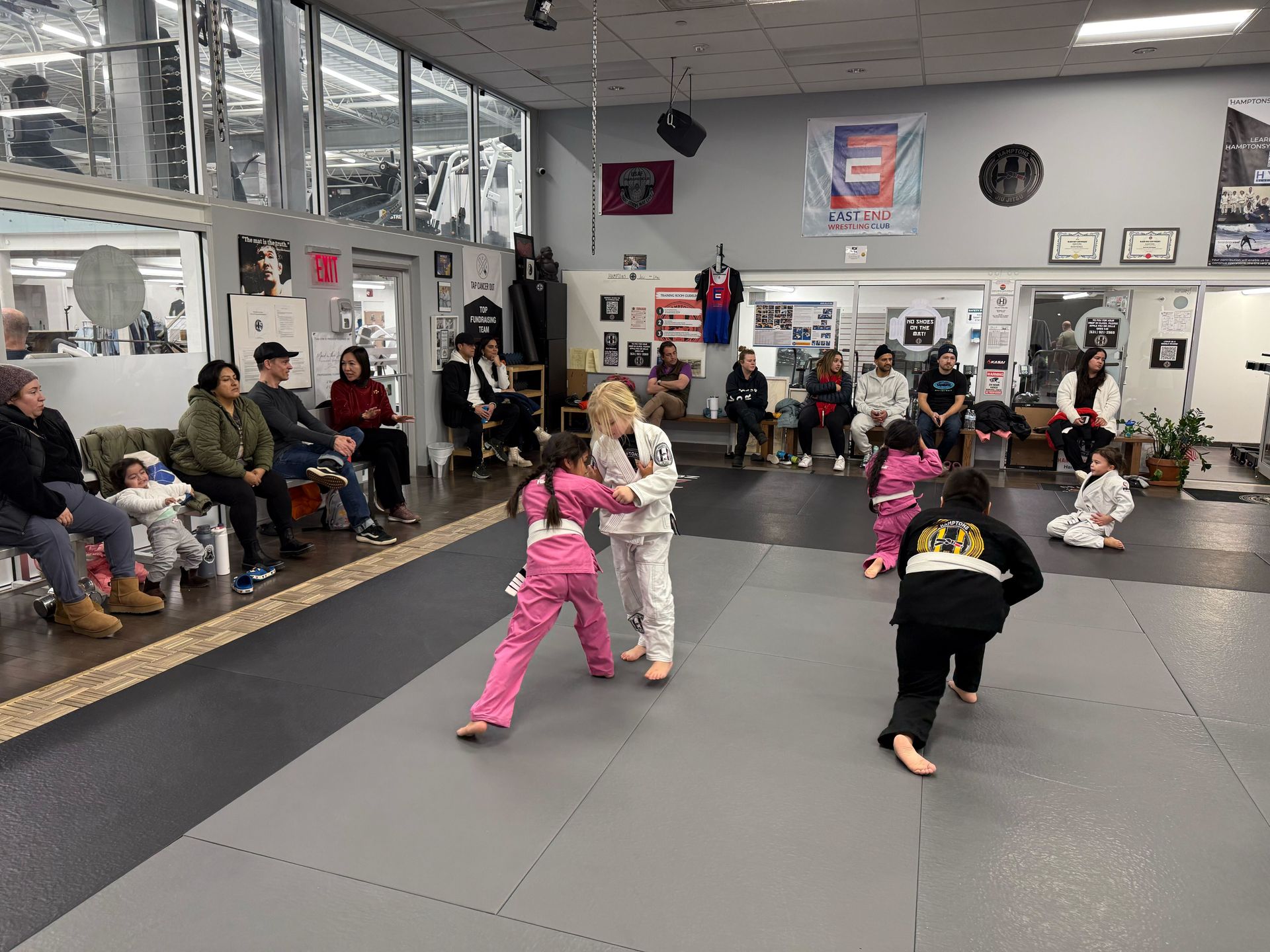
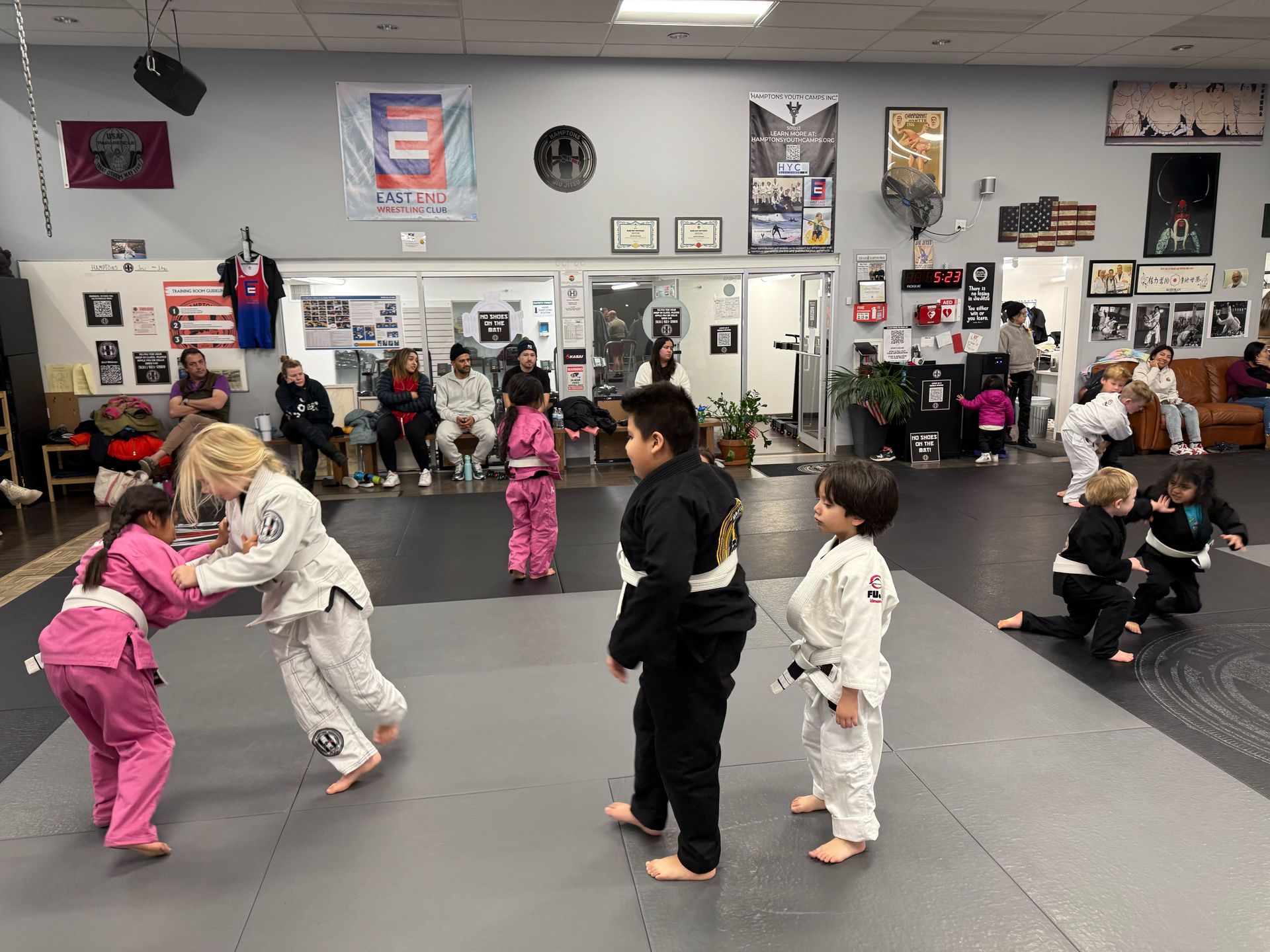
What a typical youth class looks like in Southampton
If you are picturing chaos, our classes feel more organized than most people expect. We keep the energy high, but the expectations clear. Students learn to be good partners, not just tough athletes.
A typical class includes:
- A structured warm up to build coordination, balance, and body awareness
- Technique instruction with clear coaching cues
- Partner drilling with supervision and safety standards
- Positional games that keep kids engaged and thinking
- Controlled sparring appropriate to age and experience
- A quick wrap up that reinforces respect, effort, and improvement
This structure is one reason youth jiu jitsu in Southampton NY is such a strong fit for busy families. You want an after school activity that builds skills and character, and you want it to be consistent week to week.
Age ranges and readiness: when should a child start?
Many kids can start around ages 4 to 5 when basic motor skills and group readiness are in place. At that age, the goal is not complex technique. It is learning how to move safely, follow rules, and participate with a partner.
As kids grow, training becomes more technical and strategic. We adjust expectations so students are challenged without being overwhelmed. A good sign your child is ready is simple: your child can listen for short periods, handle gentle correction, and respect personal space.
Youth jiu jitsu vs performance sports pressure
Southampton has plenty of competitive sports culture. Some kids love that, and some kids feel crushed by it. Youth jiu jitsu offers a different kind of performance environment, one that emphasizes personal growth.
Because progress is individual, your child is not stuck waiting for more playing time or a certain position. Improvement is visible in small wins: escaping a pin, keeping balance, remembering a sequence, or staying calm when tired. Those wins build focus because kids can connect effort to outcome.
That is also why families often tell us jiu jitsu supports academics. When a student practices paying attention to detail on the mat, that skill transfers into reading comprehension, math steps, and test preparation.
The takeaway is simple. Youth jiu jitsu is not just exercise. It is attention training, decision making practice, and emotional control, wrapped into an activity kids actually enjoy.
Safety, supervision, and the right culture
Safety is not an afterthought. We build it into how we teach and how students interact. Youth jiu jitsu is primarily grappling, which means we can train with control and reduce the high impact collisions common in some field sports.
We set expectations early:
- Tap culture is respected and taught clearly
- Partners are matched thoughtfully
- Techniques are introduced progressively
- Coaches supervise contact and correct behavior immediately
- Respect is part of the curriculum, not a poster on the wall
When kids feel safe, they can focus. When they trust the environment, they can challenge themselves. That is where growth happens.
Take the Next Step
If you want an activity that strengthens athletic performance and builds real life habits, youth jiu jitsu checks the box in a way that surprises a lot of parents at first. The discipline comes from routines and standards, and the focus comes from doing hard things in small, manageable pieces until confidence catches up.
At Hamptons Jiu-Jitsu, we coach kids in Southampton, NY with a structured, age appropriate approach that keeps training safe, challenging, and genuinely fun to stick with. If you are ready to see how our program supports your child on and off the mat, the next step is simple.
Develop discipline, resilience, and practical self-defense skills through Brazilian Jiu-Jitsu training at Hamptons Jiu-Jitsu.
ACCESS OUR SCHEDULE
& EXCLUSIVE WEB SPECIAL
Secure your spot and get started today with our EXCLUSIVE offer!